Discover the deep strategic mechanics that make Glory of Civilizations an epic journey through history
You inherit one hill fort and a few hundred souls who chose to follow you. Beyond the palisade lies country no map has yet named, and the decisions you make in the first decades will set the shape of a thousand years.
Other rulers ride toward the same fertile valleys you have your eye on, so the borders you draw early are the wars you fight later.
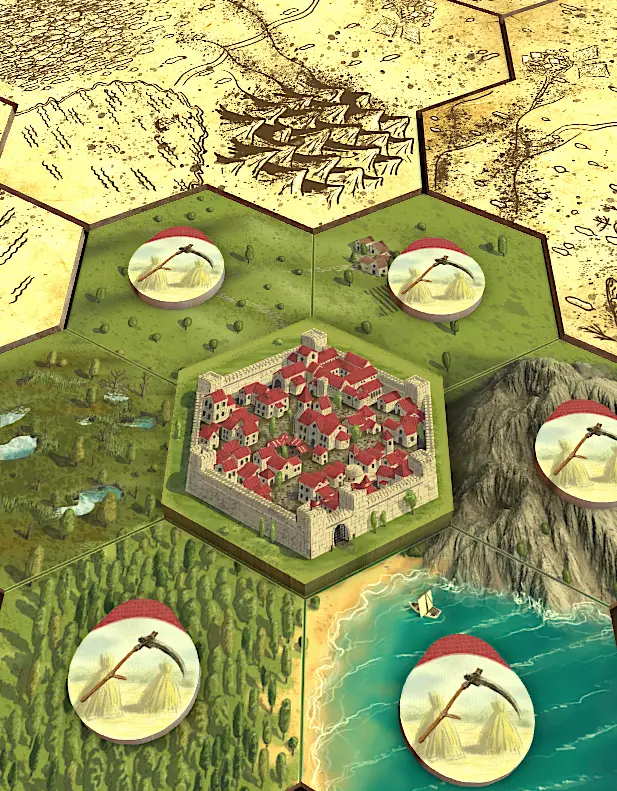
A turn is the moment when intent becomes consequence. The board offers a hundred paths and you can walk only a handful, so each round is a quiet act of priority.
Action cubes are the universal currency behind every decision. The same cube raises a city, recruits a regiment, harvests a province, spreads a faith, or opens a technology. Your realm grows, more cubes return to you, and ambition still outpaces supply every age.
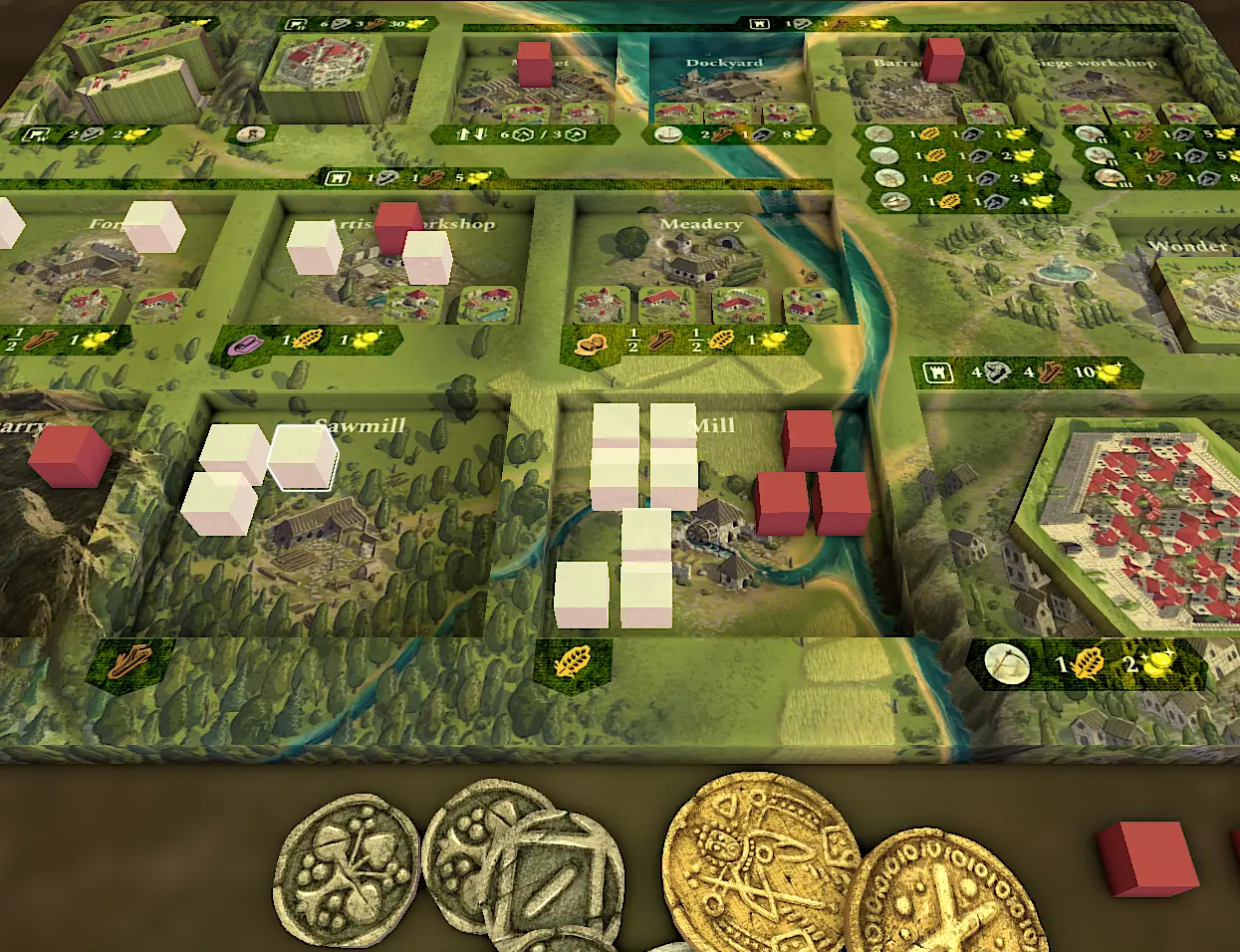
A treasury is the quiet engine behind every other ambition. Settle a river bend and your armies eat well; claim a forested ridge or a vein of stone and the materials of construction are yours to spend. The ruler who refines food into mead, fibre into fabric, and iron into weapons is the one whose markets pull in foreign coin.
Each province sends taxes back to the capital, and a single raid on an undefended city can erase a generation of investment. Walls are not decoration; they are the difference between income and ruin.


Few realms produce everything they need at the right time, and trade exists in the gap between abundance and shortage. The player who reads three turns ahead pays in copper for what others later beg to acquire in gold.
The market reacts to every transaction. Flood it with surplus stone and the price falls for everyone after you; trickle out a rare good and demand holds where you want it. Half a dozen rivals are watching the same numbers, and signed agreements are wagers on which way the next age will tip.
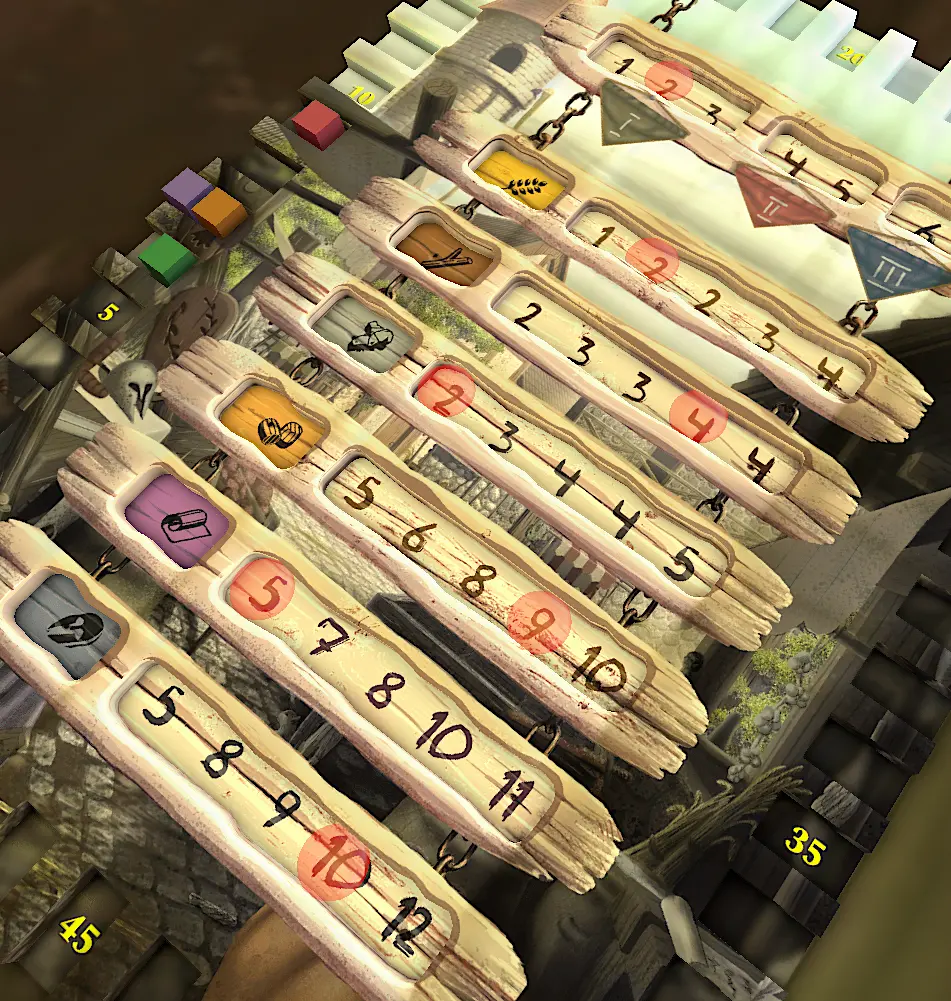
Diplomacy carries a civilization only as far as its borders need teeth. When that hour arrives, the question stops being whether to fight and becomes which arm you trained for the ground you chose.
Seven unit types meet on the field, each written with a particular weakness so no single force dominates: spears break cavalry, cavalry rides down swordsmen in the open, swordsmen cut through pinned spear lines. Beyond the seven, your nation's heritage unlocks elite units no one else can field, where a thousand years of history reach across the table and tilt one battle.


A defender on a hill is a different problem from the same army caught in open country. The ground decides as much as the army, and the commander who picks the engagement well has already won part of it before a cube is drawn.
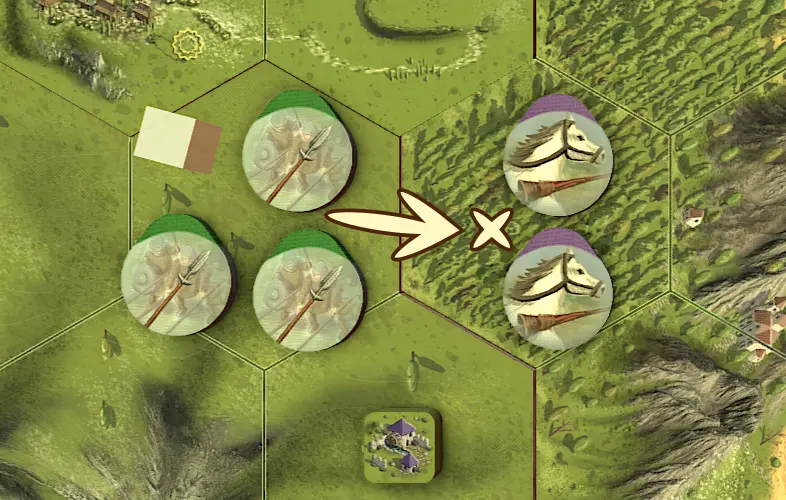
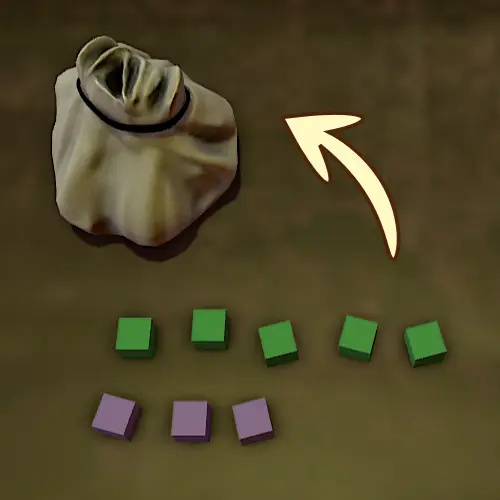
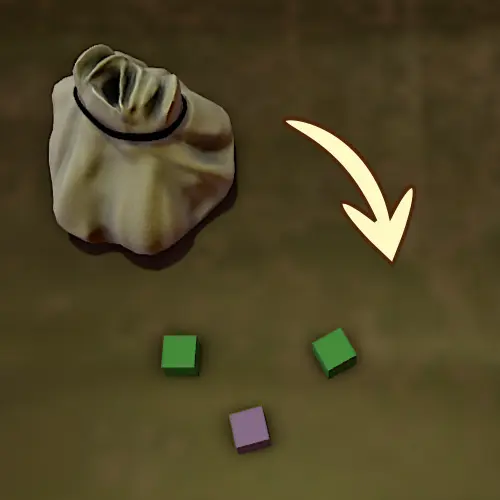
Battles resolve through the cloth bag. Your committed forces enter as cubes of your colour, your opponent's as theirs, and each draw is the abstracted echo of arrows, hooves, and steel. A drawn enemy cube is a casualty in your ranks; a drawn cube of your own colour is a soldier the enemy will not march tomorrow.
Knowledge in your realm is never truly your own. Scholars at rival courts are reading the same scrolls, watching the same skies, and the discovery you delay by a season may already be inked into someone else's chronicle by spring.
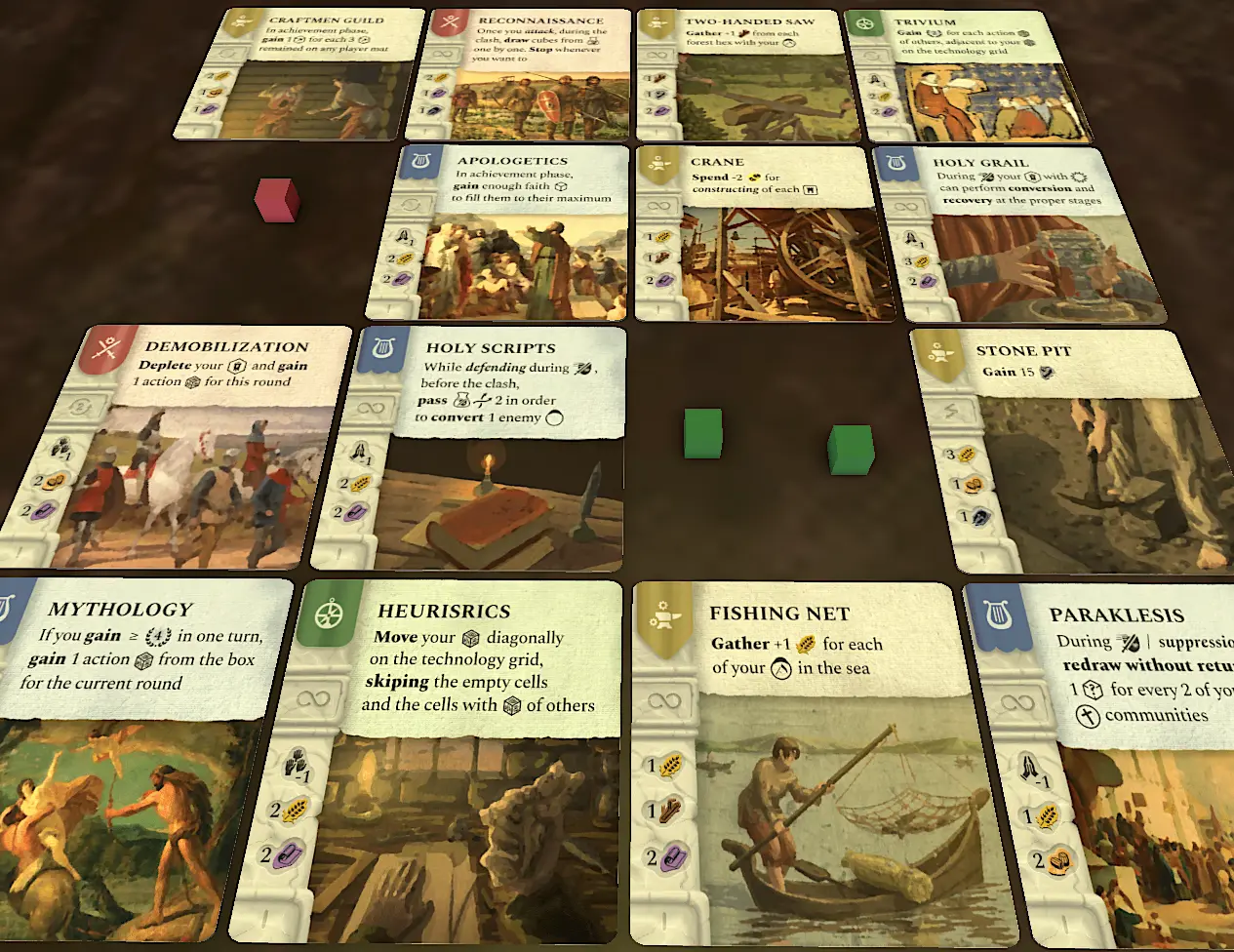
Technology lives on a shared grid in plain view of every player. Researching a card removes it from the table for good, and rivals who fall behind can only adopt what you already own at full price plus a premium. The deck holds over 120 technologies, and the grid reshuffles with every new age, so what worked at one table will rarely be the same opening at the next.
A tribe becomes a polity the moment it asks who answers for it. Three answers are open to you, and each remakes the realm from the inside.
Autocracy is built outward, sharpened for conquest and for holding what was conquered. Democracy turns inward, trying to make its own citizens richer and more loyal. Theocracy binds the realm with belief and grants a quieter, deeper authority over how the people think of themselves. None of it is permanent: when a regime has finished what it was good at, you call a revolution and trade one set of strengths for another.
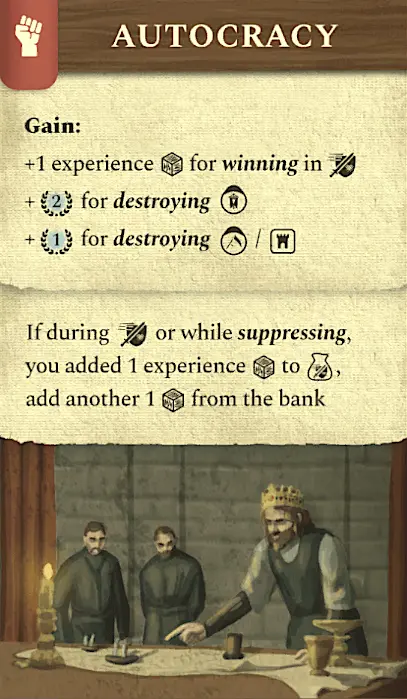
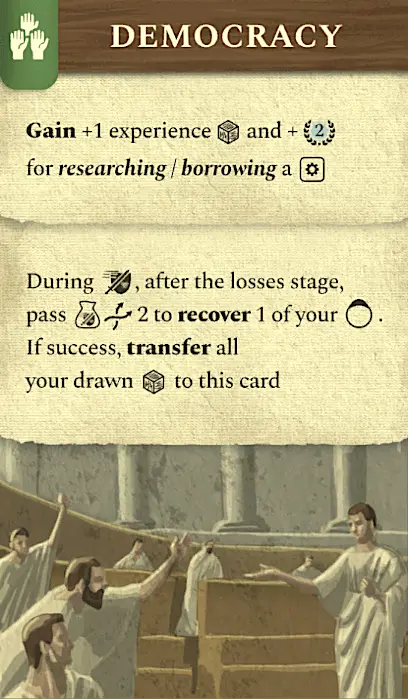
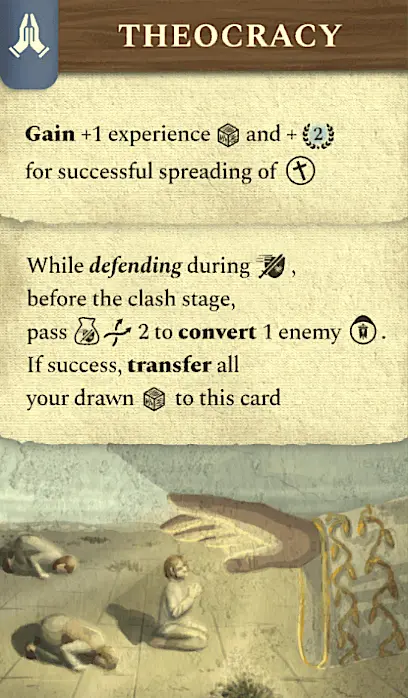
An empire that holds land but not loyalty is one bad harvest from rebellion. Territory can be lost in a single campaign; a population that prays toward your capital will outlast your dynasty, and that arithmetic has bent the fate of more rulers than any battle.
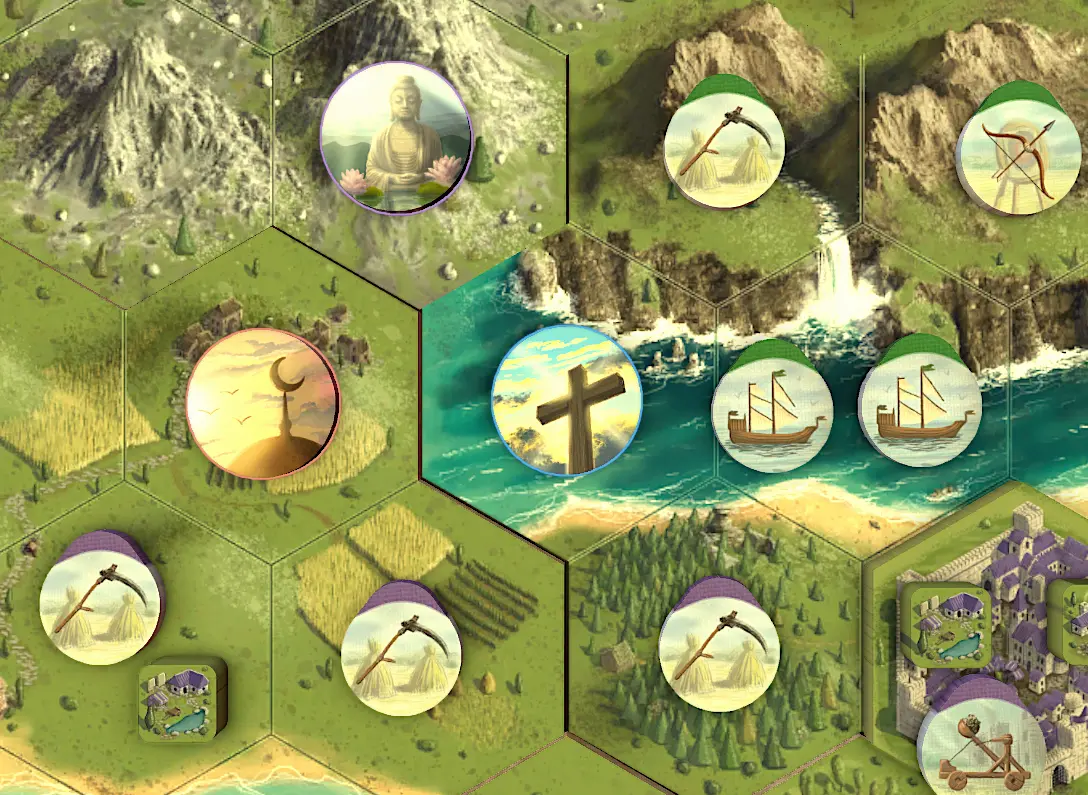
Four faiths are open to your people, each carrying real history into its rules: Christianity, Islam, Buddhism, and the older Pantheonic Faith. They are not interchangeable flavours of the same mechanic, and each behaves differently in war, in trade, and in how it crosses borders without firing an arrow.
History never lets a civilization rest for long. At the end of each round, every player has a hand in choosing which calamity, blessing, or upheaval the next age will deliver, and convincing the rest of the table that the next disaster belongs on someone else's borders is most of what diplomacy means here.
Adversities drop black cubes onto your provinces and shut down the gathering you depended on. A heresy suspends religious income; a peasant revolt neutralises units no foreign army ever reached. The larger your empire, the heavier the burden it draws, which keeps the leader at the table from running away with the game.
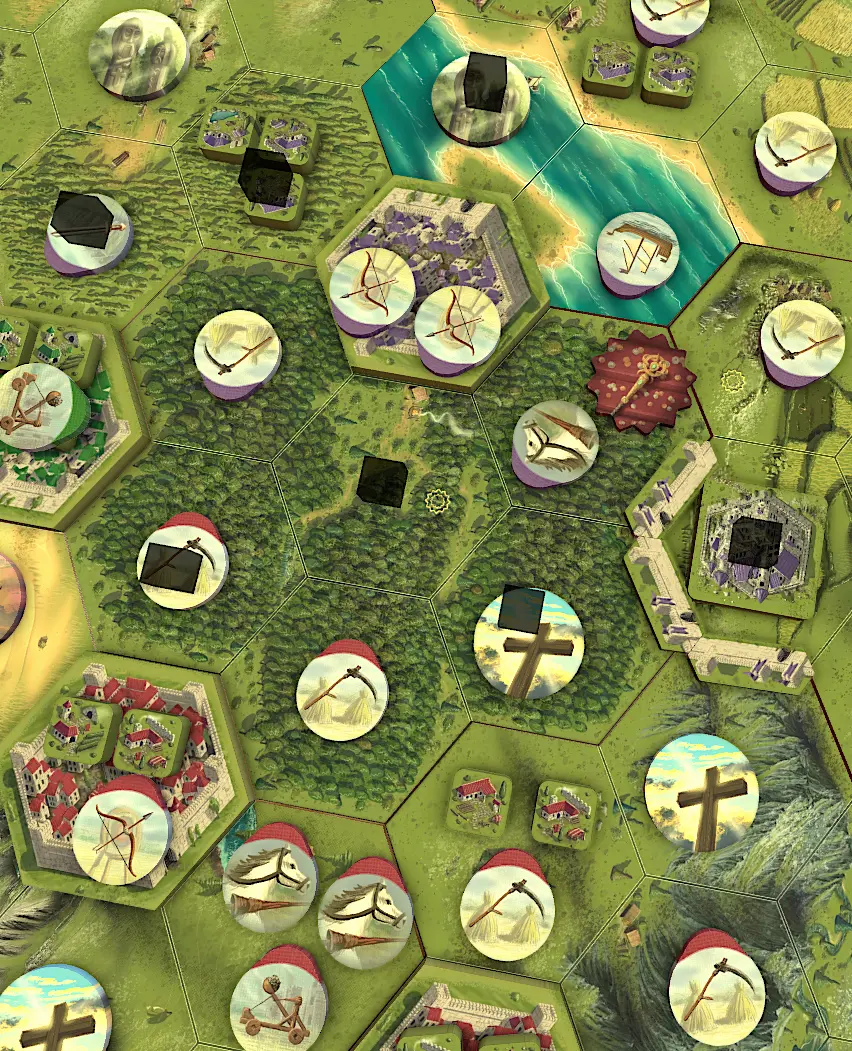
Two roads to victory run in parallel, and one of them ends abruptly. Your final score is less an arithmetic of resources than a portrait of the kind of ruler you chose to be when the choices counted.
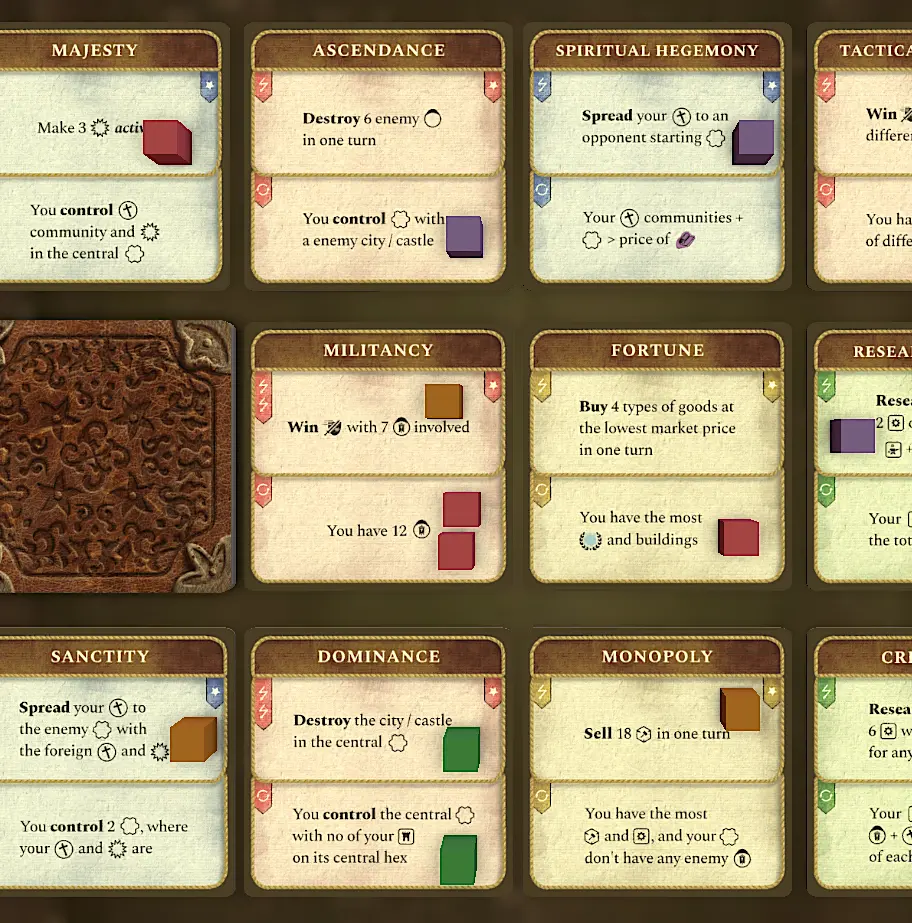
Achievement cards bring Glory like everything else, but four stars win the game outright. The cards split into economy, military, culture, and knowledge, and stars are deliberately harder to claim than Glory points, so chasing them means stepping off the Glory race for a shot at a sudden finish. A secret achievement card sits in every player's hand from turn one, and that single piece of unknown information keeps the leader nervous and a trailing player still in the running.
The chronicle runs from the fall of Rome to the dawn of the Renaissance, the centuries when peoples were most visibly becoming other peoples. Goths fragmented into Visigoths and Ostrogoths; Vikings settled and reshaped themselves into Anglo-Saxons, Normans, and Rusyns; steppe horsemen assimilated with the lands they conquered until they were no longer steppe horsemen at all. You do not pick a finished civilization at the start; you grow one out of the choices you make at the table.
At each new age you choose your successor from a constrained list printed on the card you played before: Vikings can become several things, but they cannot become Mongols. The new card overlays the old rather than replacing it, so abilities marked as temporary expire while the rest carry over. The deck holds over 160 nation cards across three ages, and the people you finish a campaign with are rarely the people you started it with.
Be the first to know when Glory launches on Gamefound. Exclusive updates and early bird rewards.
Full game on Tabletop Simulator. Track your stats. Master the game before the physical release.
Play on SteamFollow us on Gamefound before we launch and get this pack for free. Aztec, Maya, and Inca nations with 15 civilization cards and special jungle province tiles.
Follow on Gamefound